
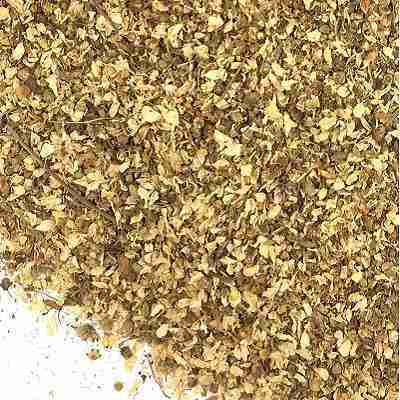
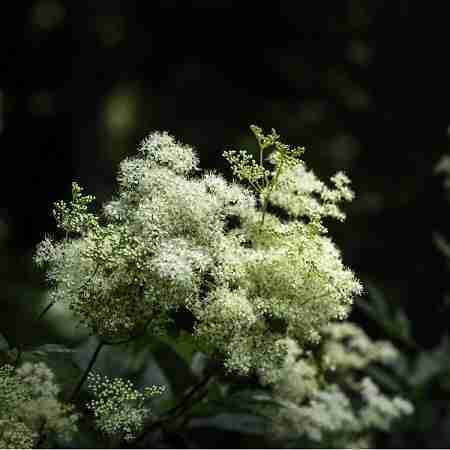
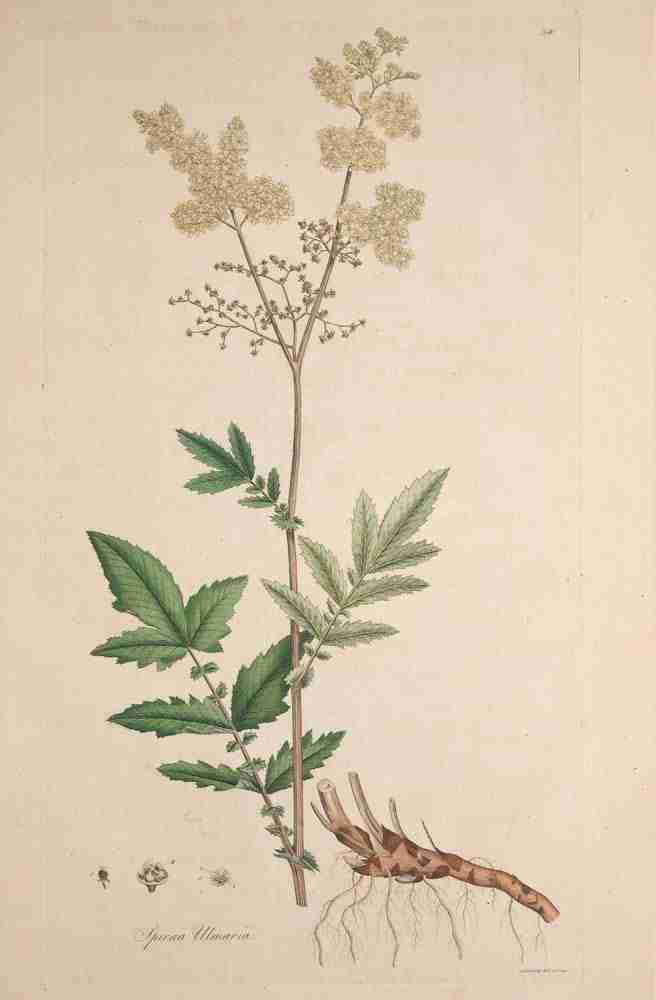
Description ShareTweetPinLinkedInPrintEmail Meadowsweet Flowers, cut & sifted (Filipendula Ulmaria) HERB COMMON NAME : Meadowsweet HERB SCIENTIFIC NAME : Filipendula Ulmaria OTHER NAMES : Queen of the Meadow, Lady of the Meadow, Bridewort, Bridlewort, Meadsweet, Meadwort, Pride of the Meadow, Meadow Wort, Meadow Queen, Nature’s Aspirin FAMILY : Rosaceae ASSOCIATIONS & CORRESPONDENCES : Element: Water Planet: Jupiter Day: Friday Direction: West Zodiac Sign: Sagittarius Chakra: 7th Crown Chakra (Sahasrara) Energy: Yin Gender: Feminine Tarot: Ace of Cups, the Lovers Animal: Owl Sabbat or Holiday: Beltane / Walpurgis / May Day (April 30 – May 1) ; Lammas / Lughnasadh (August 1) ; Litha / Midsummer / Midsomer / the Summer Solstice (btw. June 19-24) Deity or God / Goddess Association: Aine, Blodeuwedd, the Earth Goddess Parts Used: Leaves & Flowers Description: Meadowsweet is a perennial shrub in the rose family. It is known as Bridewort because it was strewn in churches for festivals and weddings, and made into bridal garlands and bouquets. In the Middle Ages, Meadowsweet’s almond-scented, creamy white flowers were a common strewing herb used to mask the unpleasant odors resulting from poor sanitary conditions when people rarely bathed and farm animals often shared human living quarters. Parkinson (a garden historian of the 17th century) wrote that Queen Elizabeth preferred this above all other strewing herbs for her own chambers. The flowers have also been used in the production of beer and a sweet honey wine commonly called mead. The leaves and flowers of meadowsweet are used in herbal tea blends and to make infusions, ointments and salves. The herb contains salicylic acid, the forerunner of modern aspirin. But it is more acidic, so could cause stomach irritation. Meadowsweet has specific use for peptic ulcers. It regulates gastric acid levels and protects and soothes GIT mucous membranes. It has also been used for musculoskeletal conditions such as arthritis, gout, and all kinds of muscle & joint pains. It promotes uric acid excretion and has anti-bacterial and immunomodulating effects. Historical Uses: antiseptic, analgesic, anti-inflammatory, inflammation, astringent, diaphoretic, anti-coagulant, antacid, carminative, anti-emetic, digestive, hepatic, diuretic, anti-rheumatic, gastric problems, arthritis, antirheumatic, diuretic, stimulates sweating, pain reliever, acid indigestion, acid reflux, gout, lumbago, sciatica, irritable bowel syndrome, headache, cold, flu, toothache, heartburn Mystical Attributes: It was from the flowers of Meadowsweet, as well as those of oak and broom, that the magicians Math and Gwydion created a maiden to be the wife of Llew Llaw Gyffes. They called her Blodeuwedd, Flower Face, but she loved someone else and plotted with him to murder her husband. For that, the magician Gwydion turned her into an owl. Meadowsweet is a sacred herb of the Druids. It is an excellent component in love magic. Place it on the altar when making love charms and conducting love spells to increase their potency. The dried herb is used for love potions. It is a good choice for Midsummer celebrations and weddings / handfastings. The flowers are used in bridal bouquets to bring joy and blessings to the bride. The scent of the flower can be infused into an oil which, if the scent is inhaled nightly, will make a woman more attractive and help her find her soulmate. This magic is best performed on Beltane Eve. The flower is sometimes associated with the festival of Lammastide, which is dedicated to the Earth Goddess in her Harvest Mother aspect. Meadowsweet tea is drunk to heighten the energy and merriment of the occasion, and the flower’s perfume has a narcotic effect that can help a person contact the heart of the Great Mother. The flowers are also worn at Lammas to join with the Goddess. The scent of meadowsweet cheers the heart, and it is good for intentions of peace and happiness. Meadowsweet can be used in magic to discover thieves. Meadowsweet is useful for those who have become rigid and inflexible, due to fear or anger, and who need to learn how to relax as a result. Meadowsweet gently opens the heart, expanding the psyche and subtly removing barriers and armor, as well as having a strengthening and soothing action. Meadowsweet is a powerful plant in mysticism. Meadowsweet was historically used in Pagan human sacrifice to attract and call upon the favor of the gods. Mystical Intentions: love magic, attraction, enchantment, finding true love, finding your soul mate, dating, weddings, handfasting, blessings, happiness, joy, balance, cheerfulness, peace, harmony, catching a thief, rigidity, inflexibility, fearfulness, anger, relaxation, opening the heart, open-mindedness, security Other Uses: Meadowsweet has been associated with mead making since ancient times and has for centuries been popular for flavoring wine, beer, and vinegar. The flowers have been added for their almond flavor to fruit preserves and make a nice potpourri ingredient when dried. Taste & Smell: Meadowsweet flowers smell like honey when fresh and become more almond-like as they age. The dried leaves have the scent of new mown hay. Botany, Cultivation & Harvesting: Filipendula ulmaria is a perennial herb in the Rosaceae family, native throughout most of Europe and Western Asia (Near east and Middle east). It has been introduced and naturalized in North America. The stems are 3–7 feet in height, and 2-3 feet wide. The reddish-to-purple stems grow erect and furrowed. The plant has dark green leaves and are whitish and downy underneath. They are much divided, interruptedly pinnate, and have a few large serrate leaflets as well as some small intermediate ones. Terminal leaflets are large, 4–8 cm long, and are three- to five-lobed. Meadowsweet’s creamy-white flowers are clustered close together in irregularly-branched cymes. The flowers are delicate and graceful, and emit a very strong, sweet smell. They bloom in the summer, from June to early September. Hardy down to zone -30C/-30F (zone 3), Meadowsweet grows in wet ground in banks of creeks, swamps, marshes, fens, wet woods and damp meadows, wet rock ledges and by rivers, forest edges, but not on acid peats. It requires a humus-rich moist soil in semi-shade. Meadowsweet will succeed in full sun only if the soil is consistently moist throughout the growing season. The plant dislikes dry or acid soils. It does well in marshy soils and heavy clay soils. Sow seed in the spring in a cold frame. The seed can be started in fall and might germinate before winter. When they are large enough to handle, transplant the seedlings out into individual pots and plant them out in the summer 12” apart in a damp shaded area. Otherwise, keep them in a cold frame for the winter and plant them out in late spring. Divide mature plants in autumn or winter. Harvest the leaves of meadowsweet before flowers appear (any time from early summer to early fall). Harvest the flowers when they have just open. It can be dried and cut into pieces for later use. Store dried meadowsweet in an airtight container in a cool, dry place. Contraindications & Toxicity: Can cause stomach irritation. May cause Reyes’ Syndrome. Do not use if allergic to salicylates or aspirin. Caution in asthma due to possibly bronchospastic effects. Theoretically may interfere with anticoagulants. Constituents: Salicylates (salicin, salicylic acid) Flavonoids Tannins Coumarins Mucilage CHO Ascorbic acid Sources: https://spiritartsandherbs.com/sources **IMPORTANT INFORMATON: Products are sold as curio items for entertainment purposes only and based upon historical and magical uses. We do not imply or guarantee that any items provide specific abilities, powers, outcomes, remedies, or treatments. Any information provided on listings or through private conversation is intended for educational purposes only and are based on historical folklore and traditions, and should not replace the advice of a physician. Use our products at your own risk. By purchasing this item, you understand and release Spirit Arts & Herbs Inc from any liability. No items we sell are for internal use and should never be ingested for any reason. Some may also not be safe for topical application, or even be safe to touch while unprotected. Always use proper safety precautions when using our products. We will not be held responsible for illness, injury, or death from the use of any product. PRODUCT IS NOT A TREATMENT. This product has not been evaluated by the Food and Drug Administration. Not intended to diagnose, treat, cure, or prevent any disease. CAUTION : Do not use ANY product if pregnant or nursing. Do not use if allergic to any ingredients. Prior to use, consult with your professional health-care provider to ensure safe use and understand effects that ingredients may cause relative to safety, personal conditions, and medication interactions which may be harmful. FOR ADULT USE ONLY. By purchasing, you confirm that you are over 18 years of age. Keep out of reach of children and pets. Do not use more than recommended by your healthcare professional. Purchase of this product indicates that you have read, understand, and agree to Spirit Arts & Herbs Terms and Conditions. Many of our products are hand made to order. Once orders are in processing, products are non-cancellable, non-refundable, and not returnable. Shipping times may be up to 3-4 weeks. ShareTweetPinLinkedInPrintEmail Related
Related products
Bear Board Games
$ 5.96
Bear Board Games
$ 7.09
Bear Board Games
$ 5.77
Bear Board Games
$ 2.77
Bear Board Games
$ 83.42