
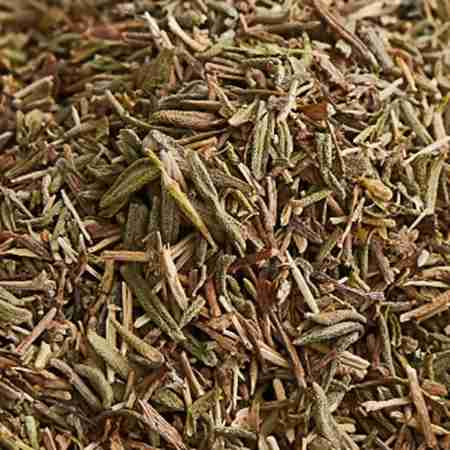
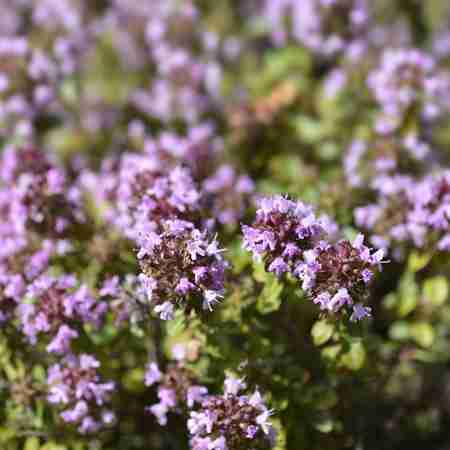
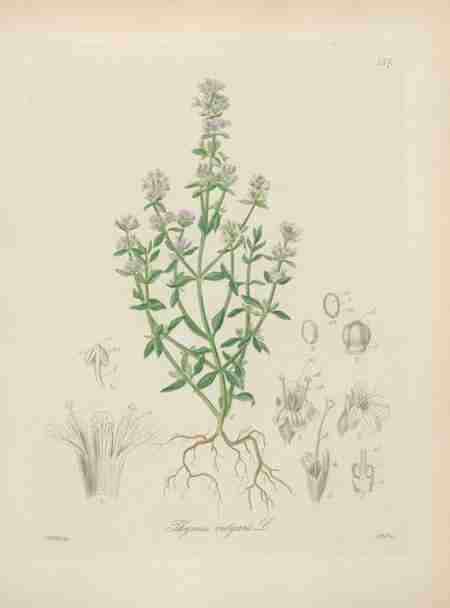
Description ShareTweetPinLinkedInPrintEmail Thyme Cut & Sifted Herb (Thymus Vulgaris) HERB COMMON NAME : Thyme HERB SCIENTIFIC NAME : Thymus Vulgaris FAMILY : Lamiaceae METAPHYSICAL / SPIRITUAL ASSOCIATIONS & CORRESPONDENCES : Element: Air Planet: Venus Day: Friday Direction: East Zodiac Sign: Taurus Chakra: 4th Heart Chakra (Anahata) Energy: Yin Gender: Feminine Rune: Dagaz Tarot Card: the Strength tarot Sabbat or Holiday: Beltane / Walpurgis / May Day (April 30 – May 1) Deity / God / Goddess Association: Freya, Aphrodite, Ares Parts Used: Leaves Ingredients: 100% Pure Steam Distilled Thyme Essential Oil Description: Thyme is a perennial, woody herb that is original to the Mediterranean region and cultivated as an annual culinary herb in many places in the world. In the garden, this member of the mint family delights with its delicate and fragrant spreading foliage as a container plant or as a natural groundcover. Thyme is commonly found in the kitchen herb cabinet. The mild pepper-like flavor of thyme pairs beautifully with sharp and tangy cheeses, potatoes, rice and eggs. In combination with other herbs and flowers, thyme adds an unexpected flavor to tea blends, soups, stews, and other savory dishes. Like several other aromatic kitchen herbs, thyme was used as a meat preservative in ancient times. Thyme was introduced into cooking as an offshoot of its meat-preserving action. Roman emperors particularly favored thyme, as they ate it before a meal to foil any poison attempts. Thyme was used as early as 3000 BCE by Sumerians as an antiseptic. It does indeed have impressive antiseptic qualities. Thymol, a primary component of thyme oil is valued for its disinfecting properties, as an effective treatment for skin conditions like psoriasis and eczema, and ringworm. Thyme helps with bacterial and viral skin infections. The disinfecting properties of thyme is said to be up to 12 times as powerful as carbolic acid. Culpepper recommended thyme as a remedy for nightmares. Place thyme beneath your pillow for a restful sleep and happy dreams and to prevent nightmares. Thyme is believed to have both analgesic (pain-relieving) and anti-inflammatory effects. By the plague years of the Middle Ages, thyme was a common ingredient in many treatments and pain killing medicines. Thyme is also used to produce topical skin care formulations, as well as natural dental products. The antibacterial and antimicrobial properties in thyme, along with its sharp and fresh taste and aroma, make it excellent for freshening breath and eliminating body odor. Historical Uses: antiseptic, astringent, antibacterial, antifungal, antimicrobial, anti-infectious, antiviral, analgesic, sleeplessness, nightmares, disinfectant, itching, dermatitis, eczema, psoriasis, skin infections, ringworm, fungal infection, foot fungus, athlete’s foot, bad breath, halitosis, body odor, pain relief Mystical Attributes: The plant’s common name thyme is taken from Old French thym, tym (13c.), from Latin thymum, from Greek thymon, possibly from thyein meaning “burn as a sacrifice”. If so, this would indicate the plant was used as an incense in sacred rites. The Greeks thought very highly of thyme. Thyme is burned before rituals to cleanse the area. Thyme was mixed in drinks to enhance intoxicating effects and induce bravery. Soldiers added it to their bathwater to increase bravery, strength, and vigor, and warriors were massaged with thyme oil to ensure their courage. It has a long association with bravery. In Medieval England, ladies embroidered sprigs of thyme into their knights’ scarves to increase their bravery. In Scotland, highlanders brewed tea to increase courage and keep away nightmares. Thyme can be used in magick spells to increase strength and courage. When working hard to achieve a goal that seems unachievable, thyme can be used in spells to help you keep a positive attitude. Women wore thyme in their hair to enhance their attractiveness. The phrase “to smell of thyme” meant that one was stylish, well-groomed, poised, and otherwise attractive. Thyme was a key ingredient of a favorite vision-inducing love potion. On St. Luke’s Day, October 18th, young girls were to do the following: “Take marigold flowers, a sprig of marjoram, thyme, and a little wormwood; dry them before a fire, rub them to powder, then sift it through a fine piece of lawn; simmer these with a small quantity of virgin honey, in white vinegar, over a slow fire; with this anoint your stomach, breasts, and lips, lying down, and repeat these words thrice, “St Luke, St. Luke, be kind to me, In dream let me my true love see!” This said, hasten to sleep, and in the soft slumbers of night’s repose, the very man whom you shall marry shall appear before you. Historical records show that thyme has been in magical and medicinal use since ancient Egypt, where it was used along with rosemary as a rub before mummification, and in household use as a pain killer. Thyme was used as an embalming herb in ancient Egypt and was burned in other places as offerings to celebrate Rites of Passing. It was placed in coffins throughout Europe to ensure passage into the next world. Thyme was sprinkled on sacrificial animals to make them more acceptable to the gods. Faeries love thyme. Its addition to your garden will attract them and it can be used in spells to communicate with faeries. Danish and German folklore list patches of wild thyme as a favorite place to find fairies. Thyme oil was a major component of an ‘ungent’ which enabled the user to see fairies but only if the thyme was gathered “neare the side of a hill where fayries used to be.” Turn to thyme for practical wisdom and making tough decisions. It can provide you with the clarity of mind you need to see a situation for what it really is. Thyme is also a good choice for rituals to mend a broken heart. Another association of thyme is with bringing about an increase in monetary fortune. Both “Three Jacks” and “King Oil,” popular lucky oils used by gamblers, count thyme as a main ingredient, and folklore states that when we plant thyme in the garden, our money luck will increase as the thyme crop grows. Mystical Intentions: fumigation, cleansing, purification, bravery, courage, confidence, hopelessness, strength, vigor, success in battle, power, boosting magickal power, attraction, funeral and burial rites, fairy magic, fae magic, sleeping spells, love potion, love divination, visions of love, true love, mental clarity, broken heart, luck in gambling, luck, money, fortune, prosperity, wisdom, decision-making Taste & Smell: Thyme has a mild pepper-like flavor and a medium, sharp, warm, fresh, herbaceous and medicinal aroma. Botany, Cultivation & Harvesting: Thyme (Thymus vulgaris) is native to southern Europe from the western Mediterranean to southern Italy. It is a species of flowering plant in the mint family Lamiaceae. This woody evergreen subshrub is familiar to herb gardens. It is a bushy plant that grows up to a foot tall and 16 inches wide. Its small grey-green leaves are highly aromatic, and in early summer it presents clusters of purple or pink flowers. Thyme grows on dry slopes, rocks, rock walls, and in cultivated gardens in a sunny location. Thyme is often found on clay or limestone soils. It succeeds in dry soils, poor soils and tolerates drought once it is established. Plants can be grown on old walls. This hardy herb can be propagated from either seed, cuttings, and/or root divisions. For best results, sow seeds indoors keeping the temperature around 70°F for germination. For propagation via cuttings, place snipped stem pieces with new growth in wet sand. In two weeks, roots should appear. Root division works best in the spring. Be sure to uproot a plant carefully to preserve as much of its root oil as possible. Divide the root system (in half or thirds) and replant the divisions a foot apart in moist soil. Leaves and flowers may be harvested just before the plants flower. Dry for later use. Store dried thyme and powdered thyme in an airtight container in a cool, dry place. Contraindications & Toxicity: Do not use if pregnant or nursing. Thyme essential oil is not for internal use. Ingestion can cause headache, vomiting, painful diarrhea, tinnitus, and kidney failure. Constituents: Volatile oil up to 3% including terpines such as thymol, carvacrol, borneol, and cineol Tannins Bitters Resin Flavonoids Gums Sources: https://spiritartsandherbs.com/sources **IMPORTANT INFORMATON: Products are sold as curio items for entertainment purposes only and based upon historical and magical uses. We do not imply or guarantee that any items provide specific abilities, powers, outcomes, remedies, or treatments. Any information provided on listings or through private conversation is intended for educational purposes only and are based on historical folklore and traditions, and should not replace the advice of a physician. Use our products at your own risk. By purchasing this item, you understand and release Spirit Arts & Herbs Inc from any liability. No items we sell are for internal use and should never be ingested for any reason. Some may also not be safe for topical application, or even be safe to touch while unprotected. Always use proper safety precautions when using our products. We will not be held responsible for illness, injury, or death from the use of any product. PRODUCT IS NOT A TREATMENT. This product has not been evaluated by the Food and Drug Administration. Not intended to diagnose, treat, cure, or prevent any disease. CAUTION : Do not use ANY product if pregnant or nursing. Do not use if allergic to any ingredients. Prior to use, consult with your professional health-care provider to ensure safe use and understand effects that ingredients may cause relative to safety, personal conditions, and medication interactions which may be harmful. FOR ADULT USE ONLY. By purchasing, you confirm that you are over 18 years of age. Keep out of reach of children and pets. Do not use more than recommended by your healthcare professional. Purchase of this product indicates that you have read, understand, and agree to Spirit Arts & Herbs Terms and Conditions. Many of our products are hand made to order. Once orders are in processing, products are non-cancellable, non-refundable, and not returnable. Shipping times may be up to 3-4 weeks. ShareTweetPinLinkedInPrintEmail Related
Related products
Bear Board Games
$ 98.52
Bear Board Games
$ 92.11
Bear Board Games
$ 92.62
Bear Board Games
$ 96.90
Bear Board Games
$ 99.70